Motorised Roller Blinds: How They Look in Your Home
Motorised roller blinds do something that most window dressings cannot: they disappear. When the fabric is rolled up, there are no chains dangling at the side, no visible pull cord, nothing to interrupt the line of a window or a wall. The motor sits inside the roller tube. The bracket holds it flush. What you see is the fabric, and only the fabric.
That minimal quality is one of the strongest arguments for choosing a motorised roller blind over a manually operated one, and it applies equally to the Silent Gliss 4960 mains electric roller blind and the Silent Gliss 4955 battery roller blind. Both look identical once fitted. The only difference is what sits behind the bracket.
The fabric is the design decision
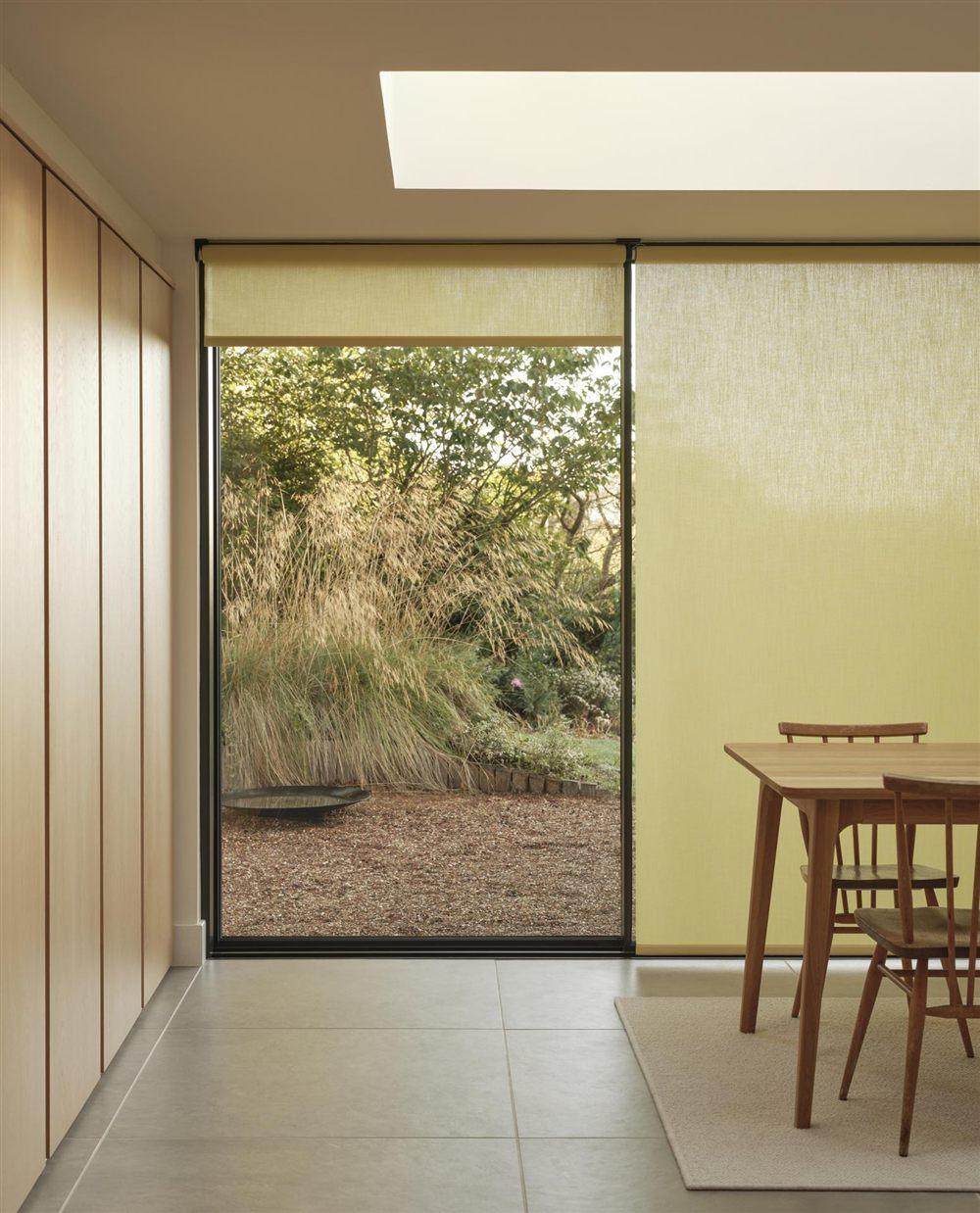
Because the mechanism is hidden, the fabric carries all the visual weight. Silent Gliss offers a wide range across three broad categories: blackout, translucent screen, and voile.
- Blackout — full light block, dense weave, available in neutral tones and deeper colours. The surface reads as flat and clean in a room.
- Screen fabric — translucent, so daylight comes through while reducing glare and UV. These have a slightly open weave and a softer appearance than blackout.
- Voile — lightweight and sheer. Lets light flood in while providing a degree of privacy. Works well in rooms where the view matters.
Every Silent Gliss fabric is flame retardant as standard. That is not a premium option or a separate range — it is how all Silent Gliss fabrics are manufactured. Worth knowing if you are fitting blinds in a commercial property or a rental where FR compliance matters.
Fitting: recess or face-fix
The mounting position shapes how a blind sits in the room. A recess-mount positions the blind inside the window reveal, flush with the wall or slightly recessed. This gives the cleanest possible look, particularly in modern or minimal interiors where you want the window treatment to be as unobtrusive as possible.
Face-fixing mounts the bracket on the wall or ceiling above the window frame. This allows the blind to cover a larger area, which is useful for controlling light bleed around the edges of a recess. It also makes the blind more of a visual feature — the drop of fabric becomes a deliberate design element rather than something tucked into the window.
Room by room
Bedroom
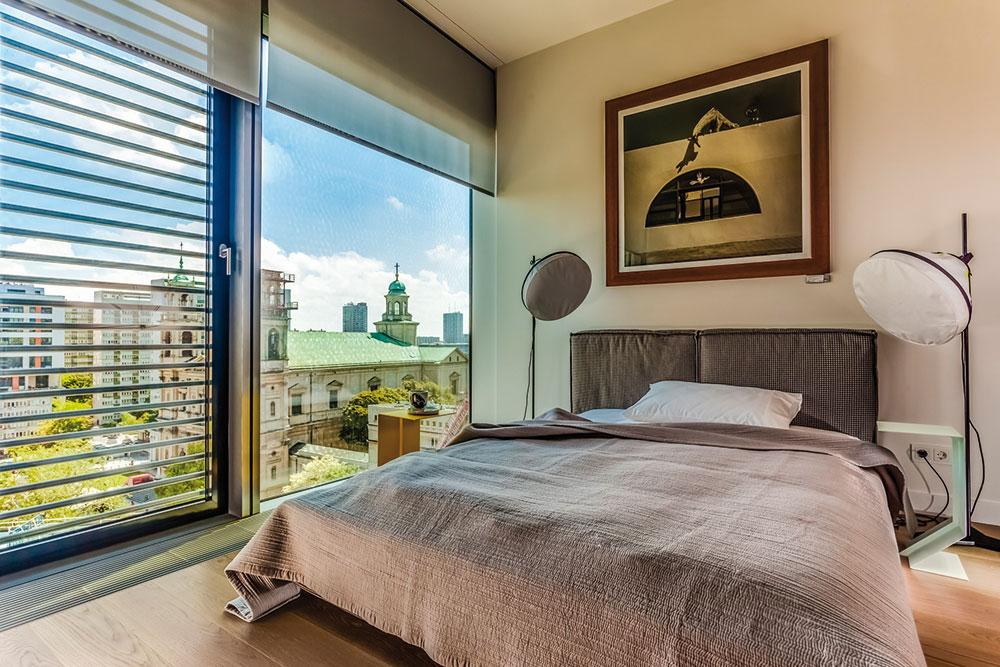
Blackout fabric is the obvious choice — and with a motorised blind, you gain something that a manual blackout blind cannot give you: a timer. Set the blind to open at a specific time each morning, letting natural light gradually increase rather than waking to an alarm in complete darkness. In the evening, closing the blind from bed via a remote or phone app takes a second.
In terms of look, a floor-to-ceiling blackout blind in a neutral tone reads as architectural. It flattens the wall and makes the window disappear into the room rather than interrupt it.
Bathroom
A moisture-resistant fabric is required here. The Silent Gliss range includes fabrics suitable for bathrooms where condensation is a regular occurrence. Screen fabrics work particularly well — they allow some natural light during the day while maintaining privacy, and the semi-open weave handles humidity better than a dense blackout weave.
For a bathroom without an extractor fan or with limited ventilation, check fabric suitability before ordering.
Kitchen
Wipe-clean fabrics are worth prioritising in a kitchen where steam, grease, and splashing are constant. Screen fabrics in this context are practical without looking utilitarian. The roller mechanism is out of reach of surfaces, which removes one of the more frustrating aspects of manually operated blinds in a kitchen where hands are often not clean.
Living room
This is where the layering option becomes interesting. A voile or light-filtering screen blind paired with electric curtains gives you full control across the day — sheer filtering in the morning, full blackout in the evening, or any combination in between. Both the blind and the curtain can be operated independently or together from a single controller.
A motorised roller blind behind a curtain also removes any visible operating hardware from the room entirely. The chains and cords that a manual blind would require behind a curtain are gone.
Home office
Glare on a monitor is one of the more persistent frustrations of working from home. A screen fabric blind positioned at the right angle cuts direct sunlight without making the room feel dark. Because motorised blinds can be adjusted to a specific position rather than fully open or fully closed, you can find the exact height that cuts the glare from your screen angle without losing ambient light.
Battery blinds suit a home office particularly well if the desk is positioned away from the window and running a mains cable would be disruptive. The 4955 battery blind is wireless and rechargeable, and the retrofit is straightforward.
What it looks like in practice
The difference between a motorised roller blind and a manually operated one is not dramatic in photographs. In a room, it is more noticeable — the absence of a chain or cord along the edge of a window is something you register when you look at the window. A clean edge, a flat surface of fabric, and no hanging hardware. That is what a motorised roller blind adds to a room, beyond the convenience of remote operation.
Both the mains 4960 and the battery 4955 are available across the Silent Gliss fabric range. If you need advice on fabric choice or fitting options, get in touch and we will help you work out what suits the room.
Shop our range
Browse the products mentioned in this article